My goal as a technical writer is to make complex information understandable and usable for a range of users. In my work, Creating quality technical documentation requires identifying necessary information and understanding how it should be structured to achieve user goals. Working with peers and subject matter experts, I use document planning, research, and strong plain language skills to craft my work.
Here are samples of the technical documentation I’ve done so far to give you an idea of my approach and skills. If you have any questions or want to know more, let me know!
Table of Contents
IssabelPBX User Guide
I created this user guide in FrameMaker according to the Microsoft Style Guide (2025). IssabelPBX is an open-source telecommunications software that challenged me to learn about a field I had little familiarity with. I wanted to create a guide that would be understandable by a novice user like me.
Here was my process:
- I started by spending an extensive time researching and using in order to understand the functions and identify what users needed.
- Then, I broke down the information into chapters and organized them according to the logical journey a user would take when setting up the software.
- Finally, I asked users and peers to provide feedback to validate the effectiveness of the user guide.
If I were to do this again, I would be more detailed in my research by making more thorough notes on the functions and keeping a careful record of helpful screenshots for ease of access later on.
Skills:
- FrameMaker
- Software testing
- Technical writing and editing
Challenges:
- Defining the scope of project and target audience
- Lack of SMEs or resources to learn from
NoFrills Style Guide
This style guide was created with a team of other technical writers to document a style guide for the Canadian grocery brand, NoFrills.
The process:
- Research, identify, and agree on brand voice, content, and layout.
- Assign documentation sections to each member.
- Meet regularly and review content to ensure consistency across work.
- Gather feedback and make revisions.
This was a fun project to do, and taught me a lot about capturing the voice and tone of individual brands. In the future, I would like to dedicate more time to the revision process and searching for quality images and examples.
Skills:
- Microsoft Word Design
- Teamwork
- Copy writing and editing
Challenges:
- Ensuring consistency in formatting and tone
- Finding sources and examples on the brand
- Using Microsoft Word as a collaborative tool
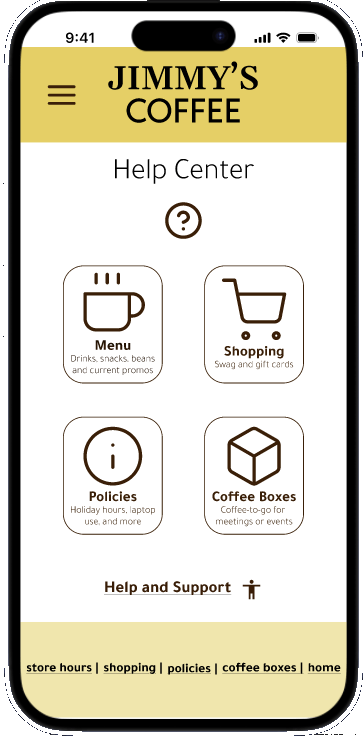
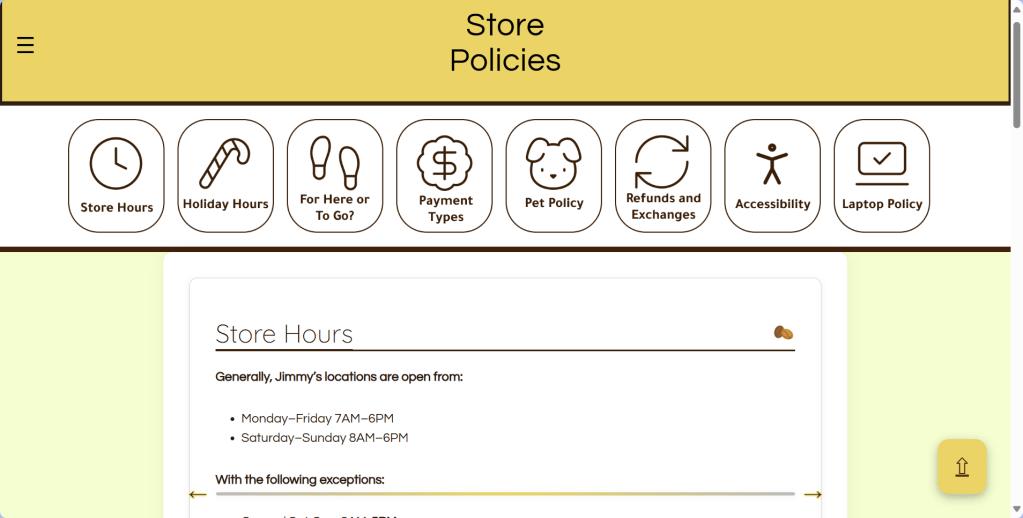
Jimmy’s Coffee Help Site
This help site was part of a four month collaborative project where we undertook the software development lifecycle (SDLC) and explored how a support site for a local Toronto coffee shop chain would be designed to serve its customers. Over the course of the four months, we underwent a process to create a low-, medium-, and high- fidelity prototype for the support site.
The process:
- Conducted weekly meetings with peers to strategize, reflect, and provide updates about our progress and goals.
- Outline plans, strategies, and work assignments to meet deliverables.
- Conducted user research and analyzed data to gain insight into prototype content.
- Created user personas, user flows, and information architecture.
- Developed prototypes using HTML in Visual Studio Code and Figma.
- Created presentations to receive feedback to incorporate into next prototype phase.
This project was intensive and incredibly demanding at times, but I learned a lot about user experience design, the development lifecycle, and collaboration because of it. If I were given an opportunity to do this again, I would try to be more proactive in defining clear goals and breaking down tasks into smaller chunks that I could put into a timeline.
Skills:
- Project management
- Figma Prototyping
- HTML coding
- User research
Challenges:
- Understanding how to use user research to influence design
- Adhering to strict timelines with competing priorities to meet deliverables
 Gloria Pham